

Lost Priokhot'e
…Catch the fish here without tackle
At the foot of bear-like mountain
Dreaming covered with the clouds.
Weary with the reminiscence
Sharing which would be a treasure:
Of the times that came before me,
Of the travels to the unknown.
I share this with my bonfire
As if speaking to a cleric:
I do not seek worldly riches
— Here my spirit becomes richer.
Alitet Nemtushkin, Evenki poet
“The world is small, but Russia is great”, Ivan Goncharov, a famous writer, mused at the fact that even though Europe was our close neighbor, we preferred to proudly call ourselves travelers when we went there; but in Siberia and the Far East – where we are at home – we were ‘just passing by’. However, even our own motherland has places where we can almost tangibly feel the expanse of taiga, the desolation of the lands and howling of the winds separating us from our home towns bringing about an exciting sense of loneliness. It is hard to believe that all these lands and seas are still Russia, such non-Russian wild beauty do they have.
It takes several hours for a plane to cross the endless taiga crossed by rivers, spotted by lakes, and covered in groves; and not a single wisp of smoke, or a road, or even a trace of human presence is seen. Then the mountains appear, and they are everywhere, as far as one can see; and it is a magnificent view! The slopes are grey and blue, and green; and some peaks glisten with snow. Black hollows and sparkly creeks separate the cliffs. Rock pillars resemble giant fangs. And then all of a sudden the sea breaks through: numerous bays and gulfs with their green waters sharply defined by the cliffy shores. Far away islands are visible surrounded by reefs. There is a storm passing by those shores, and the water glitters in the sun; and all around there are huge stone boulders reminding us of the centuries-old history.
In the center of the Khabarovsk Region, where the Sea of Okhotsk cools everything down even in mid-summer, and the coastal cliffs are often hidden away by the fog, there is one of the most isolated and uninhabited regions of Russia. This is a true ‘hermit’s corner’: when you look at the map, you see a deep gulf creating a sharp bend in the coastline.
Two vast valleys of rivers Uda and Tugur surrounded by the mountains and taiga, and a narrow sea coast along with a dozen islands of the Shantar Archipelago all form the Tuguro-Chumikansky district. There are no roads, no cities or towns, and no factories here – just like the other neighboring districts. Only a couple of villages are scattered here; one of which is Chumikan, the administrative center of the district. Population mostly includes northern ethnic minorities who are hunters, fishers and reindeer herders.
This large district of the size of Portugal or South Korea remained underexplored for a long time while the rest of the Far East was studied and developed. The massive Stanovy and Jugjur Ranges and strong rivers with numerous tributaries make this area difficult to traverse. Geological surveys rarely came here; archeologists have not discovered any large cultural sites or monuments; and settlers avoided these hardly inhabitable lands altogether. Snow stays here for ten months in a year; winds are frequent and strong; the temperature rarely exceeds 18°C; and below a thin layer of soil there is permafrost.

Even now the Tuguro-Chumikansky district remains poorly explored, isolated and sparsely inhabited. Hardly over 2 thousand people live in the area of almost 100 thousand square kilometers. District residents usually travel to their destinations by plane or helicopter. Freights are delivered by a winter road; or by ships to the port of Chumikan in the Uda estuary during shipping season. ‘Uncomfortable’ is a mild understatement; however, it is mostly due to this complex logistics that the nature here remains intact.
The clearest rivers are rich with fish. Spinners of the Khabarovsk Region know that the best game is found here, in Uda and Tugur basins (the only thing stopping them from invading these lands is the helicopter rent!). Tourists come from afar to observe wild animals in their natural habitats, and admire the wilderness, the snow-capped mountains, the beauty of the cliffs and the untamed Sea of Okhotsk. The most reckless strive to visit the Shantar Islands: it seems they are just around the corner, but they only let select few in.
This Taiga Land
Khabarovsk Region is mostly taiga. But what is taiga, praised in songs and stories? It is an endless forest spreading from the Ural Mountains to the Pacific Ocean. Huge spruce on the mountains, delicate larches along the swift icy-cold rivers, impenetrable heaps of trees broken by storms – all of this is taiga. Everything here remains the same from the prehistoric times. Anton Chekhov wrote that the power and the charm of taiga is not in its giant trees, nor is it in its deathly silence, but it is in the fact that only the birds know where it ends.
Taiga has many faces: its dull plain with a complicated labyrinth of lakes, deceptive marshes and impenetrable cedar trailing shrubs end sooner or later, making way to tall and dark conifer forest, somber and silent. A maze of tall spruce filled with the musty scent of needles, bark and humid moss... It is a fantasy forest, despite clouds of mosquitoes, and it captivates you bringing you back to your childhood. Generations of dreamers were drawn to these forests to ‘chase their dreams, the fogs and the smell of taiga’. Where else can you feel free, test yourself, and meet nature face to face either alone or with close trusted friends? As Vladimir Vysotsky wrote: I eat, and chew, and swallow air; It’s only here that I can be Behind tree bars, but truly free!
Better Are Only Mountains
After a long exhausting passage through the forest recess it is such a blessing for a weary traveler to finally see the majestic mountains. It is good to climb one of the peaks of the great basin divide, like the protagonist of the Last Campfire by G. Fedoseev did, to “once again, from up high where eagles soar, catch another glimpse of the kingdom of taiga, and marshes, and insects humming, and bird chorus”.
Nikolay Aboimov, an Evenki writer, also admired the Okhotsk ranges: “When you look at the fence of these peaks, bare cliffs forming circuses and ridges, and they take your breath away. What beauty, what grandeur, what power and mightiness. They stand there like knights in sharp-pointed helmets. Lower peaks bend their heads before them. Now I realize why anyone who has seen the rocks and cliffs even once will always be drawn to them again with a passion. They want to resemble these, feel proud, and strong, and beautiful. They can do so in the mountains” (Tales of Evenki).
Mountains and peaks make for two thirds of the Tuguro-Chumikansky district terrain. There are several mountain ranges that, in fact, form the mighty Stanovy Range of over 4 thousand kilometers in total. It is a basin divide for the Arctic and the Pacific Oceans. At least, it was classified as such in early twentieth century.
The Stanovy Range overwhelms the observers with its grandeur, steepness and somber appearance. These places bewitched Grigory Fedoseev, a writer and surveyor: “I recognize you, Stanovy; your gigantic spurs and celestial peaks; your gapping black abyss and ancient ruins of the cliffs; your primordial chaos and primeval wilderness. I get drunk on your wind; and I daydream of barely discernible scent of mountain yellow-cups, sharp smell of rosebays from the cold caves, and spicy sweetness of humid lichen”.
One of the important sections of the mighty divide is the famous Jugjur – a mountain ridge that goes for 700 kilometers along the coastline of the Sea of Okhotsk. It is known as the home of untamable winds. Locals find it infamous rather than famous; and old-timers retell legends about it. There were times when its passes grew covered with ice and became impenetrable, thus protecting the locals from their aggressive neighbors. Even now it is better not to attempt crossing it without a guide: snow beds can be found even in summer.
They say that in winters, blizzards last in Jugjur for days; that snow and ice crusts several meters thick rise up to the treetops; that one’s breath freezes in the cold and drops down in frost-dew... This ridge takes on the main strikes of the wind. In winters, the cold continental air flows down to the Pacific, rushing over the Far East in winds, blizzards and storms and bringing dry and sharp frosts. In summers, cold and humid sea air masses go to the mainland from the ocean and bring freshness, rains and fogs. Both the continent and the ocean only share the worst with the Far Eastern shores.
Jugjur is menacing but picturesque. This is what Goncharov wrote about it: “… The mountains are one steeper, greyer and more impenetrable than the other. They are like artificial pyramids of rocks. And none looks climbable”. He even called one of the peaks, the looming Jugjur, the ‘Yakutian or Tungus Montblanc’ describing it as a straight wall with an icy snow cap, as if a diamond embedded in a ring on the very top.
Icy Okhotsk Sea
They say one can admire the mountains forever, just like the sea. Bitterly cold, often gloomy, with thick fogs and ice along the coast, the Sea of Okhotsk has its own beauty. It is one of the darkest in the world. When you look at it from up high, you can see the green and dark-blue areas. However, up close the waves have a steel sheen; they roll heavily; and you can feel their menacing remarkable power. And how beautiful the sea is when it’s storming, and everything is boiling and roaring!
The storms are rare at the Sea of Okhotsk in summer, for winters and autumns are their time. And then it demonstrated its full might. Strong and frequent winds create high waves in this large and deep sea; the waves are 4 to 6 meters high, sometimes even 11. The most restless is the Shantar Islands region. When the commotion is strong, waters break in the narrow straits between the islands, the waves crash against each other and rush as if in a giant reservoir.

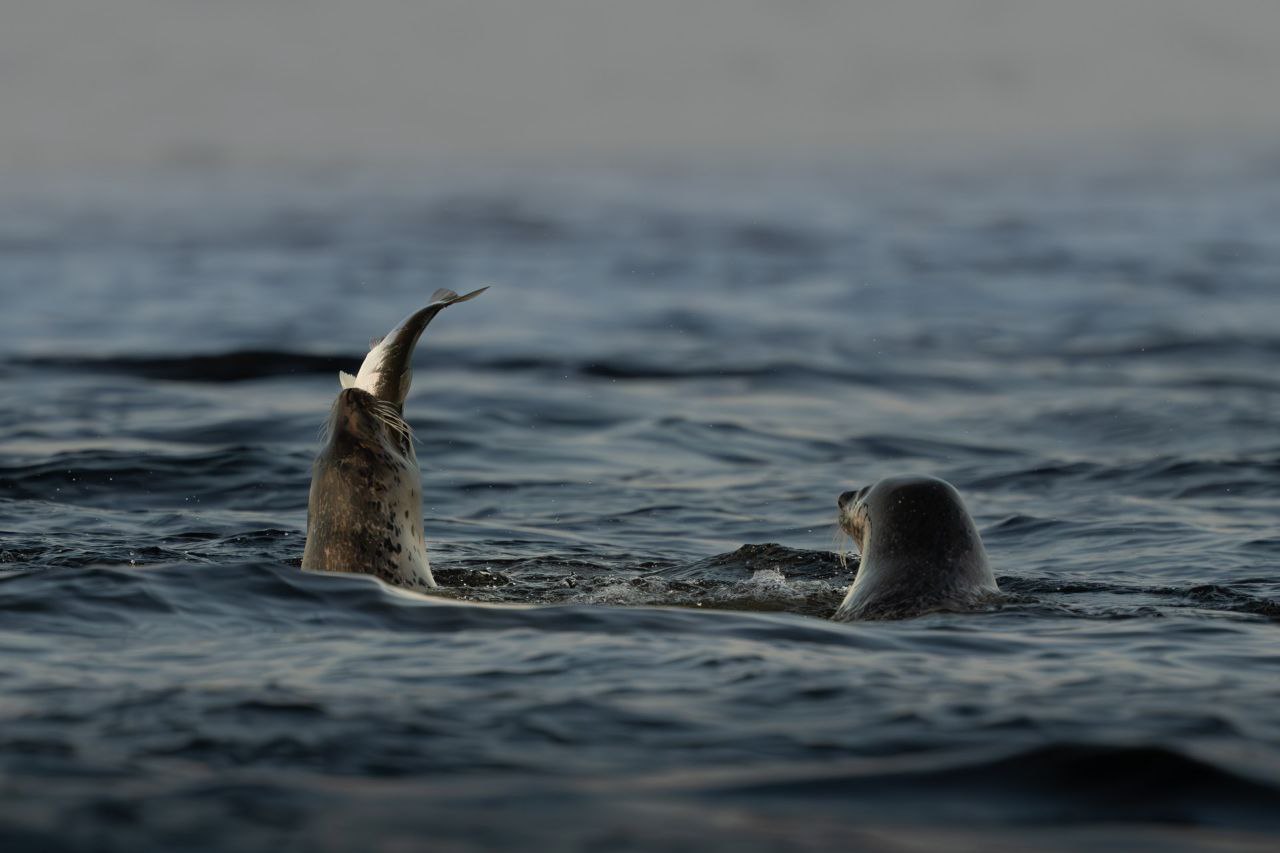
The Sea of Okhotsk is also known for its high tides, up to 10 meters. Twice a day the tide goes up a couple of meters, and then drops back down again, as if breathing. The ice appears in the Uda Gulf and the Tugur Bay in late October. It breaks in May, but only completely thaws by mid-July. Despite its low temperatures, the Sea of Okhotsk is rich with resources. Abundant food sources in its waters and many rivers full of rapids and rifts provide for valuable salmon species: chum, pink, coho, Chinook, sockeye salmons. There is a large population of the red king crab; seals and whale can also be found here.
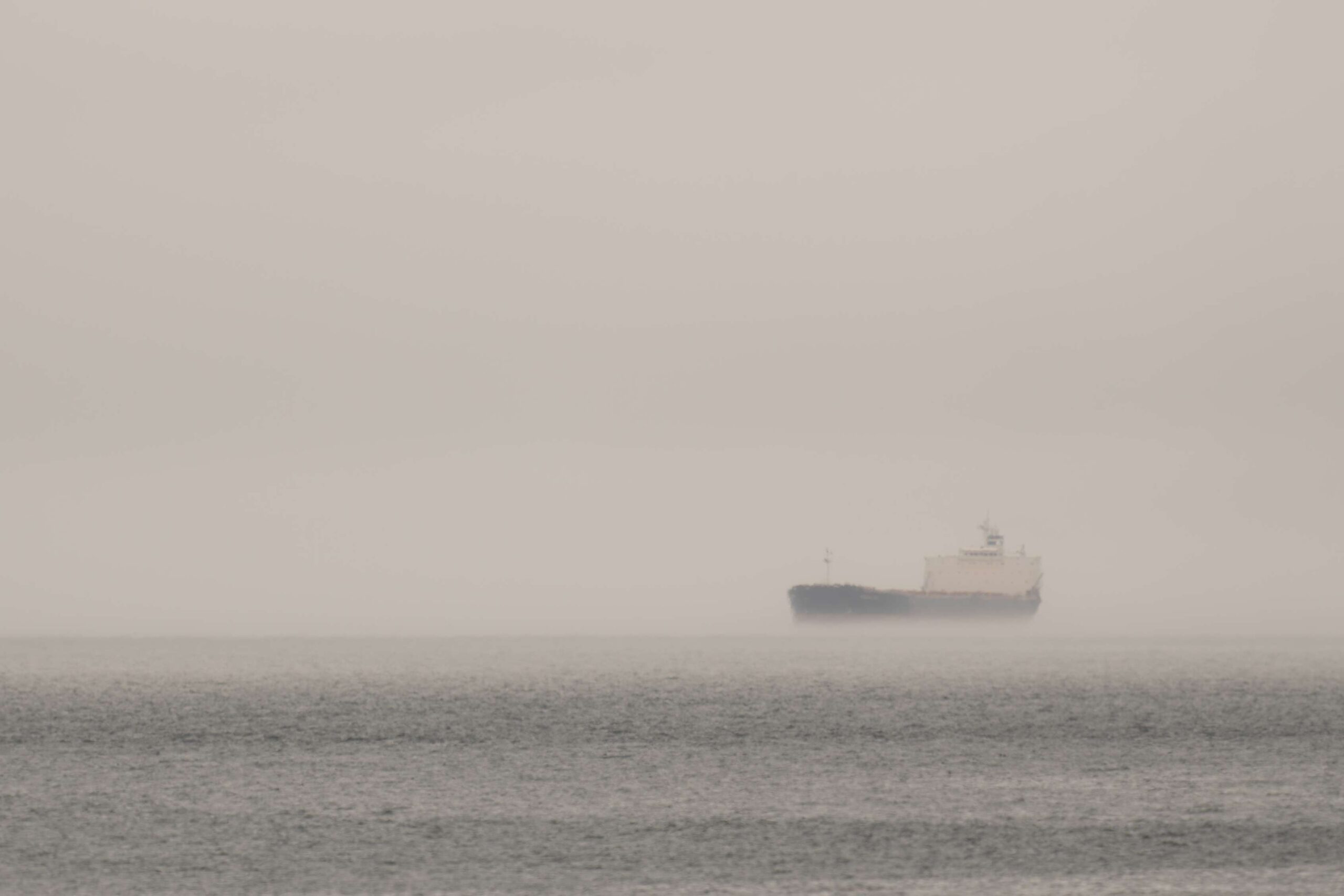
Sailors and fishers have always found the Sea of Okhotsk to be difficult. Shipping traffic was troubled by bad maps, strong and underexplored currents, and, especially, thick long-lasting fogs. But times change, and the sailors stopped calling it harsh. And the weather is changeable in the Far East. One can spend the entire day slowly moving through thick fog trying to navigate between dangerous cliffs and reefs; and then in the evening in an instant all the fog is drawn away by the wind and the sky becomes clear, and fantastic rocks and peaceful ocean glows in the evening sun become visible.
These shores exist as if to inspire the artists. Steep cliffs reaching the very edge of the water are eaten by the time and adverse weather. Waves crash against their feet forming a white boiling wreath. Salty sprays rest on black rocks in white spots. Splashing of waves, gulls crying – everything merges into general hum and goes away in the wind.
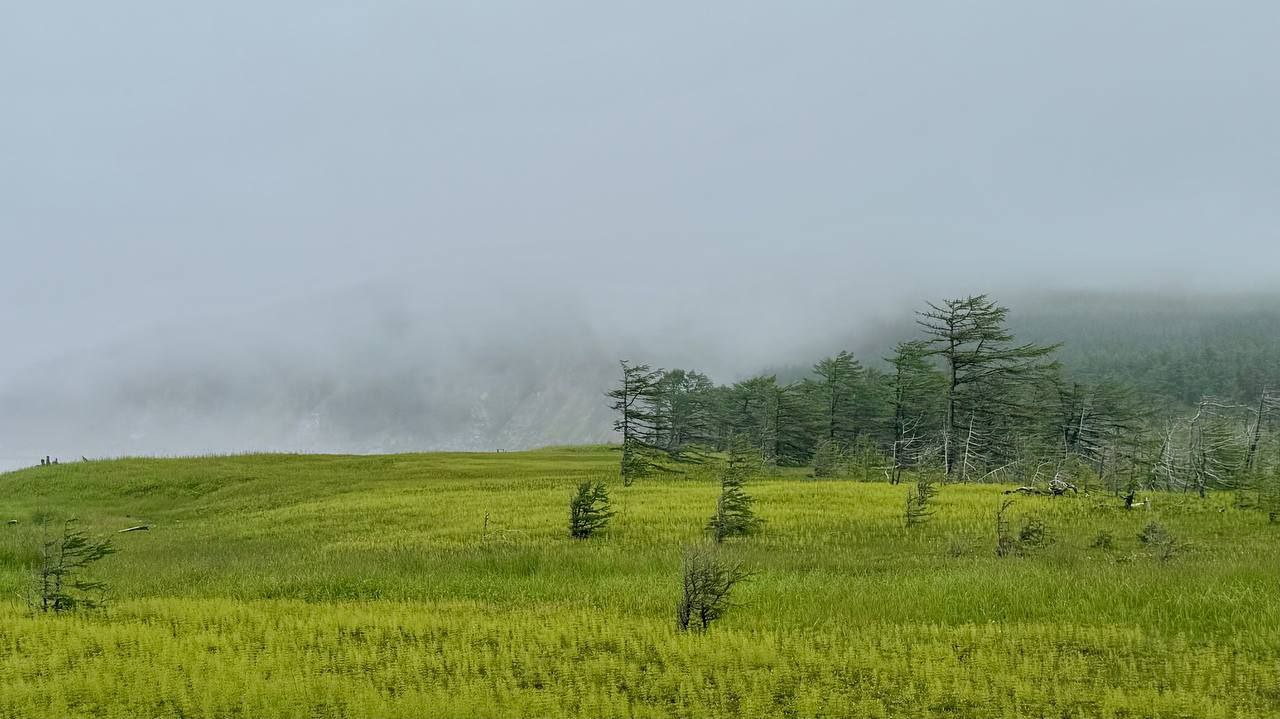
Larches whimsically bent by the autumn and winter winds grow along the shore. On the barren ledges they trail their branches along the rock and hide their roots in the splits. Plants have to fight against the wind and frosts for the major part of the year here, but they are awarded by a right to live here, on this shore. It is a daring and upbeat beauty.
There, In the Fog
The climate of the region is defined by its location: along the coast of the Sea of Okhotsk, between high ridges, and relatively close to the Yakut frost pole. Warm season does not last for long. Nighttime frosts stop by the end of June, and begin in the end of August when the first snow falls in the mountains. Mornings are usually crisp, even in the heat of summer. In July the temperature rarely goes over +18°C. The average January temperature is –30°C.
Closeness of the Sea of Okhotsk makes the climate excessively humid. Many rivers flood in springs and summers from the thawing snow or long rains. Strong winds are frequent: in winter from the mainland, in summer from the sea. A cold current goes along the coastline from north to south; ice keeps until mid-July causing long-lasting summer and autumn fogs.
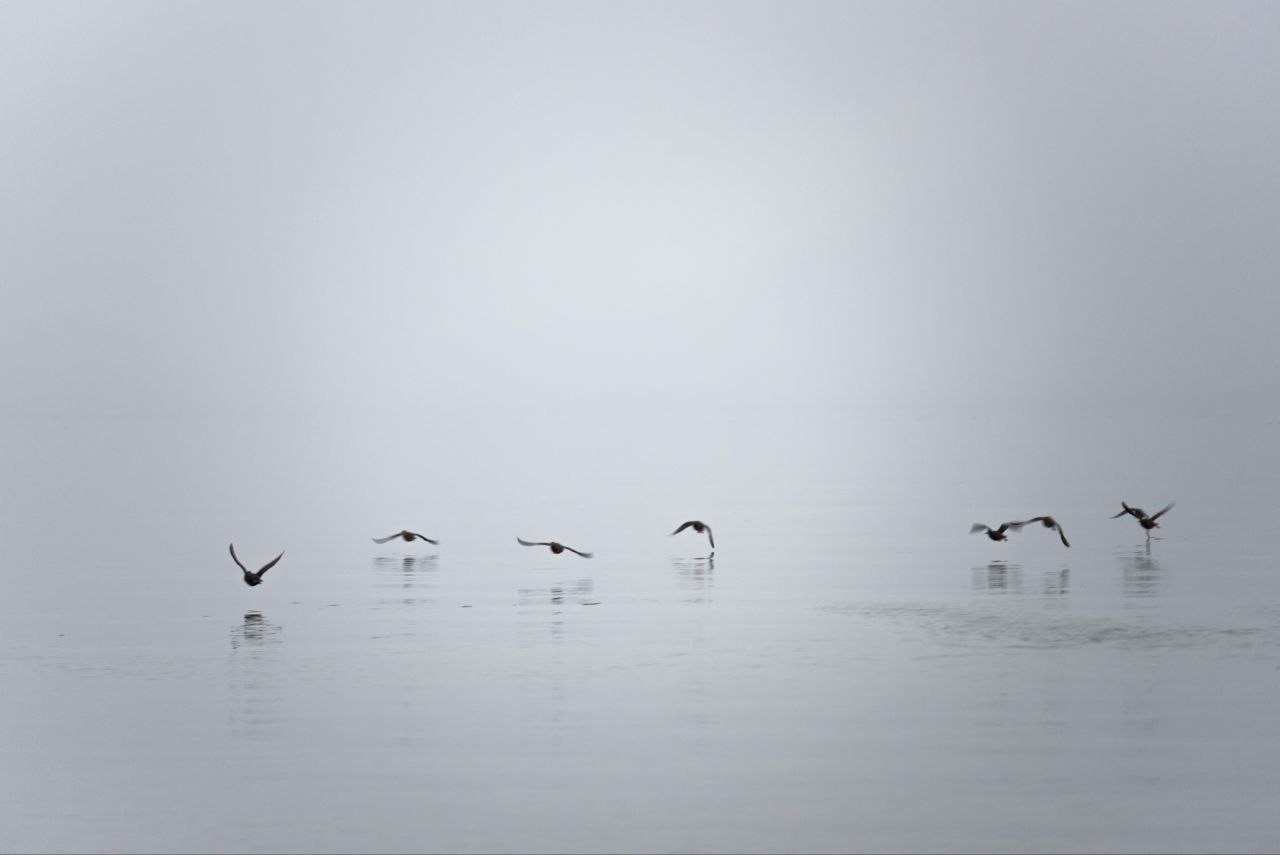
Fogs are constant companions of the Okhotsk coast. They can be different here: light as a mist, thick as a snowslide, or ash grey and slithering as a giant snake. The protagonist of the novella Spotted Dog Running On Seashore by Chinghiz Aitmatov (and a movie under the same title), a boy of the Nivkh hunting tribe, mused at the darkness surrounding him: “…Harmless fogs, these silent visitors coming in winter that he loved so much covered the entire world with even white haze and enchanted it by the milky stillness; making earthly objects soar and grow ghostly numb in the air; filling the soul with inexplicable terror and longing of some fantasy vision turning the fog into a looming and omnipresent adversary. Dark puffs of fog floating over the restless sea, intertwining, slithering, spreading and clenching again, resembled snakes”.
Blue Shantars
Bluish silhouettes of the islands are visible from the shores of the Tugur Bay. They seem to float in the air. Their cliffs appear and slowly fade away in the mist. These are the Shantar Archipelago of 15 islands, every one of which is unique and unmistakable. Ancient Nivkh had told legends about these uninhabited patches of land growing like cones in the midst of the water expanse. They went there in their wooden boats to fish; and it took an entire day. Now these islands are a state nature reserve.
This is how nineteenth century explorers saw the islands: “With the first rays of the sun the whalers found themselves next to several islands. Their steep brown cliffs and mountain slopes covered in pine forests rose above water. Peaks were visible high above covered in fog. The sun rose over the sea, and the groves became dark blue, as if veiled” (Anatoly Vakhov, Captain Ligov’s Tragedy).
This incredible place is called the Shantar Islands. Lush green oases along the steep cliffs surrounded by dangerous straits and strong currents.
Small vessels might find it difficult to land here: suitable bays are scarce, and there are constant obstacles in the form of fogs, ice, restless sea, reefs and cliffs. Even when it is quiet, the straits have numerous whirpools and riptides.
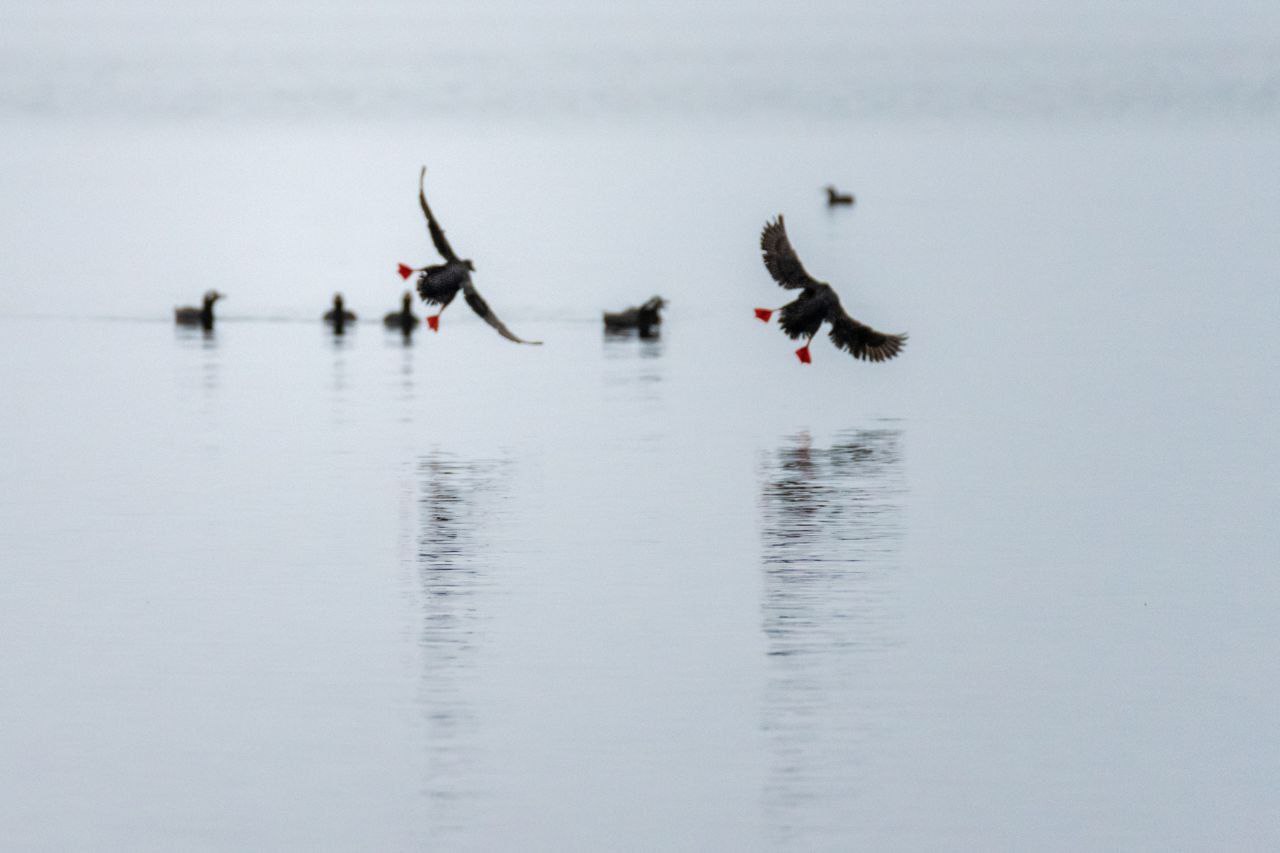
Mysterious, foggy and impenetrable islands are covered in hundreds of small waterfalls. Fantastic sculptures of capes and pillars guard their secrets; and the cliffs are like a geological museum: due to regular slides rock formations are exposed resulting in the shores of marble and capes of jasper. The rivers are rich with fish; whales feed close to the islands; seals haul on the shores; and the cliffy barren islets hold nests of the largest sea bird colonies in the Far East.
The coastal waters clear from the ice only for one and a half or two months. Summer comes to the Shantar even later than to mainland – in mid-August. In the early July chicks hatch in the sea birds’ nests. And still frosts can hit every summer day; it may even snow. Only by the end of June the plants start growing quickly. Practically in a couple of weeks lush and colorful meadows appear full of rare plants and flowers in the mixes most surprising to the botanists.
Shantars are inconceivable and paradoxical. The weather changes quickly, summer and winter coincide; and lifeless sea suddenly opens up with all its beauty. At low tides water rushes away for hundreds of meters. Submerged reefs come to surface, and a blue or orange starfish, medusa, hermit crab, a colony of mussels or acorn barnacles, and sea squirts colorful as flowers can be seen a meter deep.

Rivers Swarming with Fish
Mountains, taiga, sea, islands – it is a bliss! But the region has one more reason to be proud: it’s clear mountain streams rich with fish. Centuries ago the Cossacks under Ivan Moskvitin living along the Okhotsk shores noticed that the rivers here are “well-stocked; and the fish are big, unlike the Siberian one… So rich are the rivers that one only need to spread the nets, and it will be struggle to drag it out with all the catch”.
There are numerous rivers and creeks in the Tuguro-Chumikansky district. Almost all of them are relatively short, full-flowing and strong, going through the rocky bed of woody valleys and cliffy ravines. Salmons come to the rivers from the sea to spawn; and their fry fall prey to graylings, lenoks, whitefishes, chars, pikes, and taimen. The river water is so clear that you can observe the migration and spawning of the wonderful chum, pink and coho salmons.
The largest river here is Uda. Its basin fits almost entirely within the district. It flows from the Jagdy ridge through the Uda plain into the Sea of Okhotsk. Rivers Tyl, Torom, and Al flow in parallel to Uda to the Uda Gulf. The second largest river of the district, Tugur, flows to the Tugur Bay. All rivers here serve as spawning grounds.
Uda is incredibly picturesque. Upstream it goes through a mountain region; parts of its corridor are bogged up; and the estuary is wavy and forked. This river is one of the richest in taimen in the world; and some of the biggest specimens are found here. This is how Grigory Fedoseev described the local rivers: “This is its home: the holes are deep, and the food is abundant. I went out to the river in the morning to enjoy the sunrise; and the wretched thing surfaced, fooling around, right by the shore. Huge as a log that devil was; one wave from its tail stirred the entire pool. What small fish was floating around, jumped right out of the water, can you believe it? Of course, they fear taimen… If only I had a spinning rod for this stud; when he reaches the rapids it’ll be a feat to catch it…” (from Death Will Wait for Me).
True Character
The emblem of the Tuguro-Chumikansky district has two deer (a wild one and a tame one) on a green field, fishes on a blue one, a golden shield, and an arrow. All of it symbolizes taiga, deer herding, hunting, fishery and the minerals hidden in the depths, including gold. Hidden – because there are plenty of mines in the district, all surveyed but not produced.
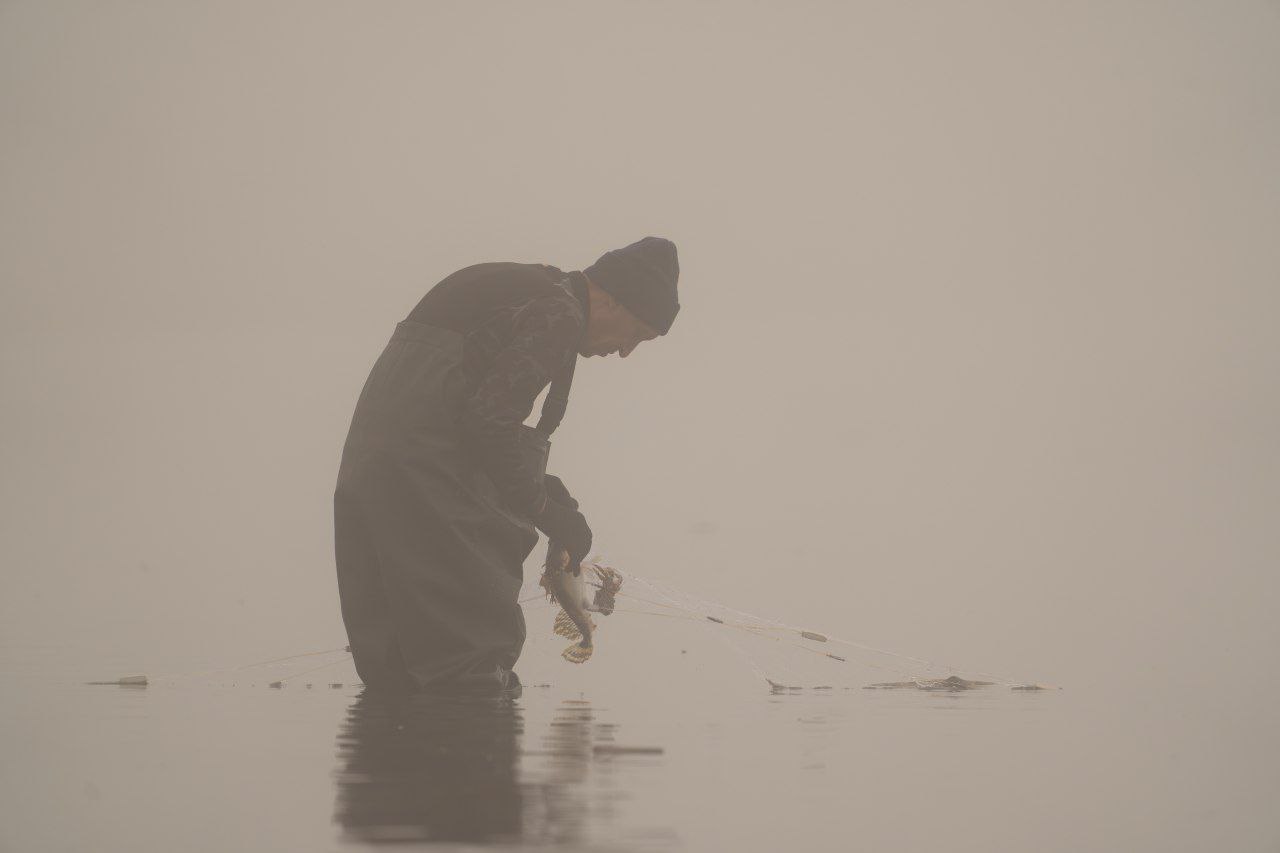
This is a rich and generous land; but its biggest treasure is its people: sincere, kind, friendly and in tune with the nature. They live in a harsh climate separated from the ‘mainland’ by huge distance; and so they have strong independent spirit and the feeling of responsibility for one another.
Northern traditions of support, solidarity and hospitality hold fast here; it is customary to share big game with the neighbors, and leave firewood and food in cabins in case someone wanders by.
Northern ethnic minorities, mostly Evenki, make for more than half of the population here. Centuries ago their ancestors came here in search of lichen for their deer herds and of new hunting grounds. They were the ones to name countless rivers, lakes, ridges and other landmarks for the most part of Siberia and the Far East. Evenki are known as the best taiga guides (sleigh drivers), hunters and fishers; they find their way easily in the endless expanses of taiga perfectly navigating its paths and marks.
The district’s treasure is its people, and the people have their own kind of treasure as well. “In the cities people go to exhibitions and museums, to the movies and theaters to observe human life; here we constantly admire the nature and its life instead. Sunrises and sunsets cheer us up with their natural colorfulness; and every creek sings for us. Endless variety of colors, sounds, animal and plant kingdoms free of lies and hypocrisy gifted us with the same qualities” (Nikolay Aboimov, Tales of Evenki).
It is worth mentioning that up to the beginning of last century Evenki did not divide the year in twelve months, using a nature calendar instead. “When the frost is bitter, that is January; snow covers the branches in February; bear cubs are born in March; birds come in May; larches dress in green in June; deer shed the skin from their antlers in August; in September it becomes hard to gather the deer in taiga; squirrels change color for the winter in October; and so on” (Grigory Fedoseev, In the Clutches of Jugdyr).
Many Evenki call themselves ‘Evenkil’, which means ‘true character’, ‘true people’. Kindness and wit are not the only national features of these people; they are also unselfishly friendly and incredibly honest. “You will not find better friends than Evenki, if you treat them well” (Grigory Fedoseev). «И не найдешь преданнее друзей, чем эвенки, когда они видят доброжелательное отношение к ним» (Г. Федосеев).
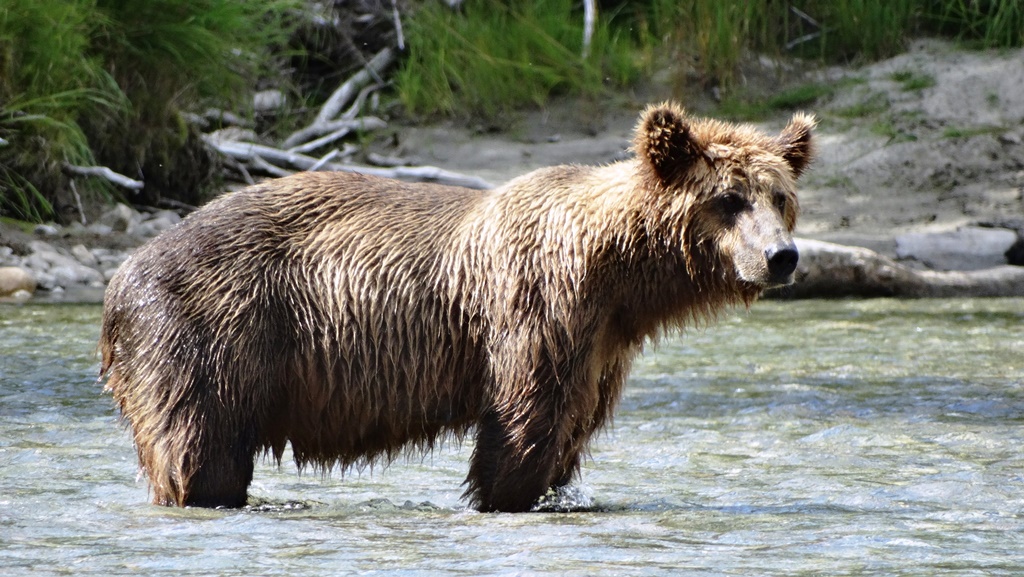
Locals observe an unspoken ‘law of the taiga’: “take what you need, but leave something for your host, or you will be a thief”. They apply a similar principle when dealing with the nature as well: one cannot take more from nature than one truly needs to live. They treat all animals and plant conscientiously and honestly, and many local traditions reflect that. There is even a custom of calling out to the bear before shooting it, if the need arises to kill this revered creature.
Just as other related ethnicities, Evenki are used to live, as scientists say, “in the context of waiting for the encounter and movement”. It is a whole philosophy. In taiga encounters can be expected any time, and new people bring great joy. The best seat in the tepee is always reserved for a guest. Moving from place to place, Evenki left encrypted messages in their encampments for other travelers: knots, twigs, notches showing the direction in which they left and distances measured in days of travel.

Following the Animal Trails
The Ohkotsk Sea region, the Priokhotye, is vast. Come up with any route, and it is highly likely no one has ever taken it before. For a long time you will only come across animal trails. What can we add, even the rich and diverse ores and mineral resources of this remote corner of the Far Eastern land are still underexplored. Botanists, zoologists and other researchers also have a lot of questions for the local nature. Even now expeditions are still led here, and new discoveries are made.
Travelers can see even the most ordinary grass, flower or a tree that are unlike the ones they left at home as a discovery. Every day brings new interesting encounters and experience. Where else can it be other than in the Far East that has so many wonders at sea and on the land alike! Seeing these places can become a pivotal point in one’s life. The expanse of it are striking; and it becomes impossible not to think of these places, not to seek out every word of them, not to miss them sorely and not to anticipate coming back.